May the Dust You Touch Become Gold
My father and I would nap together during his final days.
Sunday afternoons were my mother's only break. She wandered thrift stores in search of the third vacuum cleaner we didn't need, while I stayed home to care for my father.
We'd talk for a while, but he tired quickly — nothing like the man who once held us spellbound with his stories. Pancreatic cancer had left his body so weak that he no longer had the strength to turn himself over in bed. So before closing my eyes, I made him promise to wake me so I could help him.
He never shook me. Never called my name. Never made a sound. Instead, he rubbed my back gently and waited — the same way he had woken me for school all those years ago.
If I could sum up my father's essence in one word, it would be this: gentle. Gentle in his words. Gentle in his movement. Gentle in his spirit.
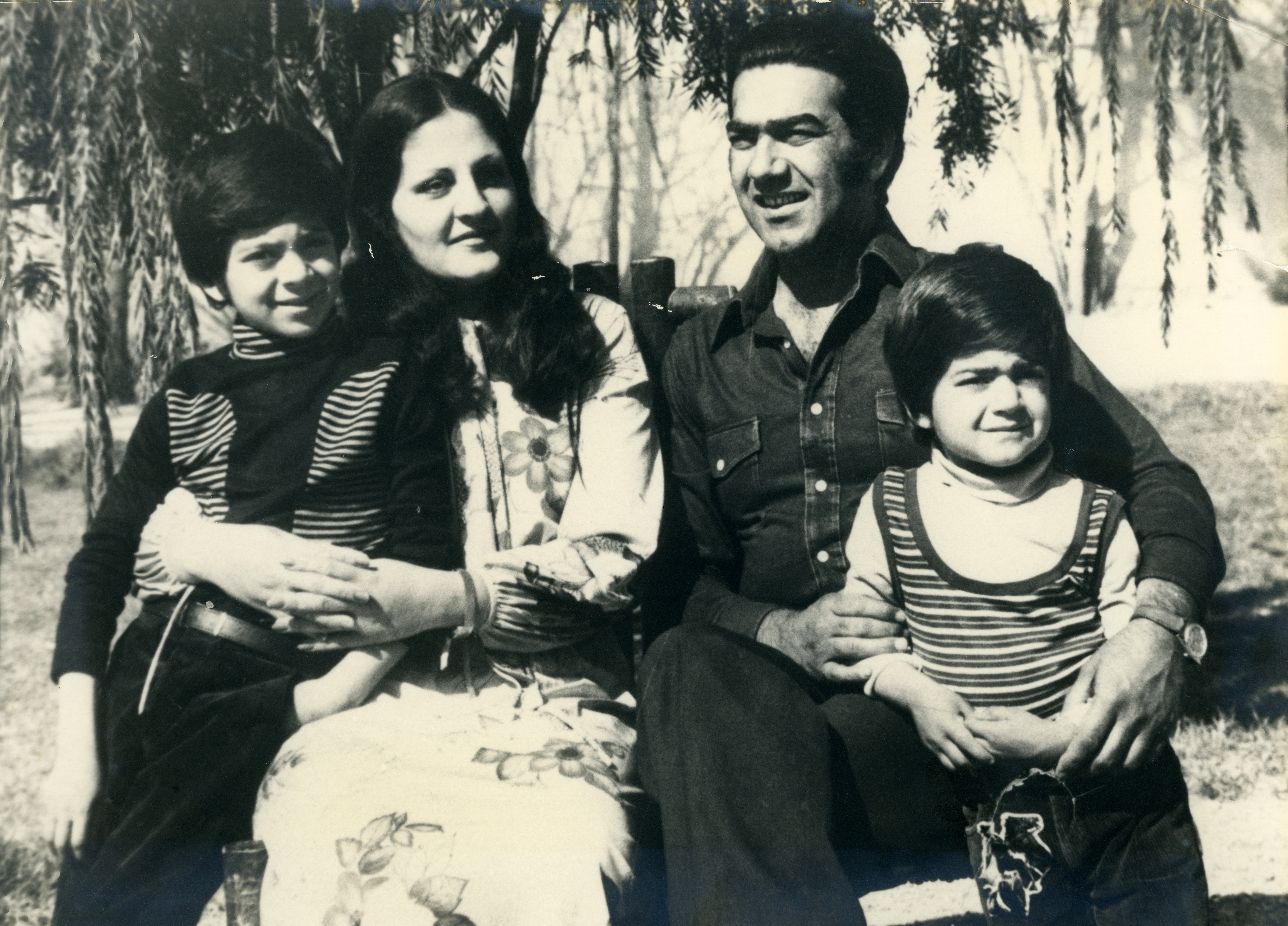
Kandahar, Afghanistan, early 1980s. My brother Khaled, my mother, my father, and me in his arms.
My father grew up in Kandahar in a large family villa shared by grandparents, twelve children, and a cook whose family had long since become part of ours. My father's siblings always said he was their mother's favorite. She blessed him often: May the dust you touch become gold. She died at 38 from a hemorrhage during childbirth because the hospital in Kandahar lacked the means to determine her blood type. He wept recounting her even in old age, still angry at a government that couldn't equip a hospital. I believe her death planted in him an unyielding faith in education and progress — a belief that suffering didn't have to be inevitable.
The Soviet invasion in 1979 upended everything. My grandfather, a retired mayor, fled Kandahar in secret to avoid imprisonment, and my father — a high school teacher and principal — became the family's main breadwinner. His salary couldn't feed sixteen people, so he drove a taxi and worked nights.
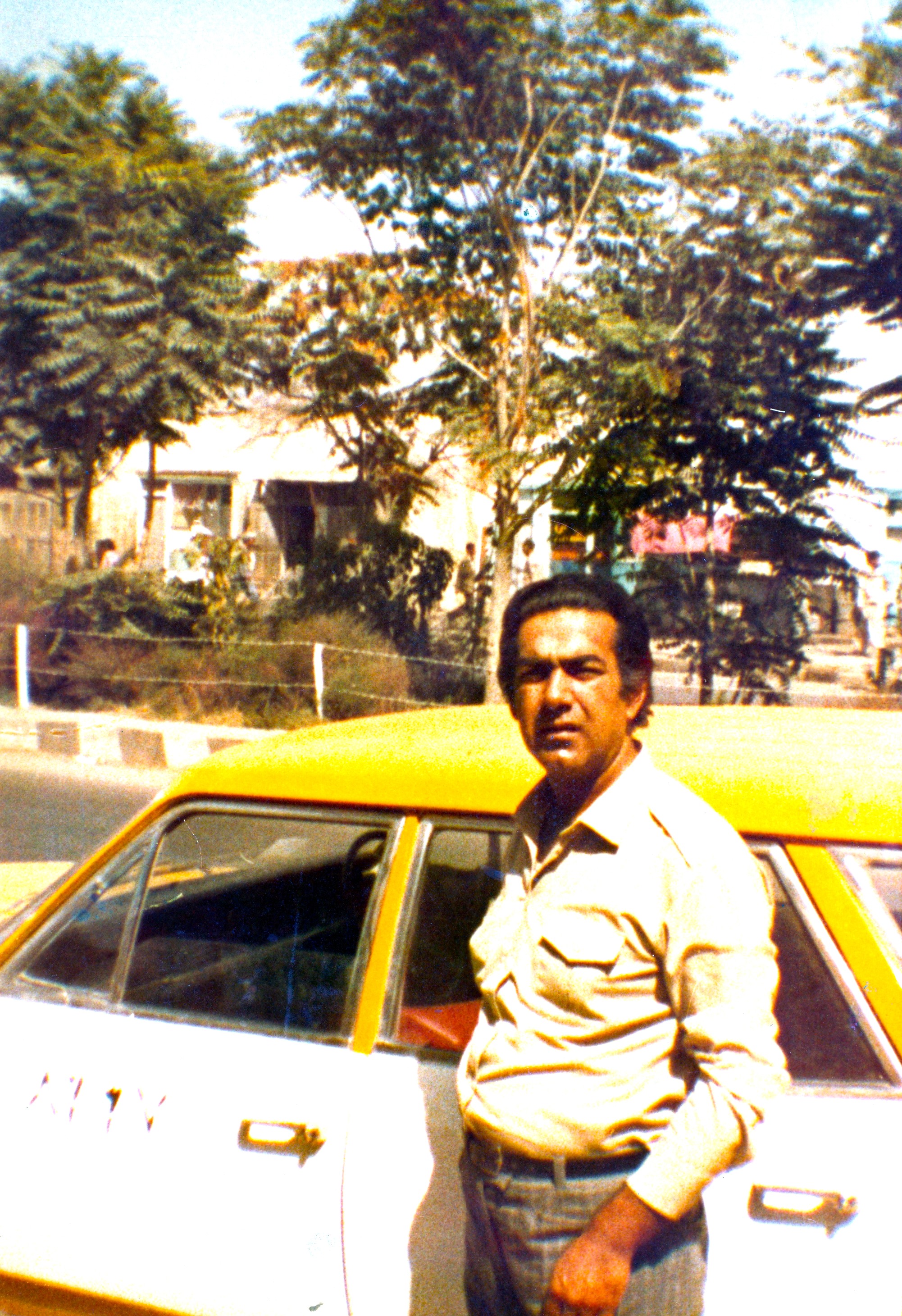
My father beside his taxi in Kabul, Afghanistan.
One of my favorite memories is riding in that taxi as a child. My cousin Ashraf and I pestered him until he agreed to bring us along, on the condition that we duck below the dashboard so the cab looked vacant. When passengers climbed in, my father asked politely if they minded that we tagged along. Everyone answered with an accommodating smile.
Our extended family eventually made their way to India, and in 1990 my parents and two brothers came to Washington, DC. My father arrived with $200 and not a word of English. He found work at a toll booth at Reagan National Airport, where he stayed for twenty years.
My father had no wealth to leave, no title, no great name in this country — but what he left me was harder to see and impossible to lose.
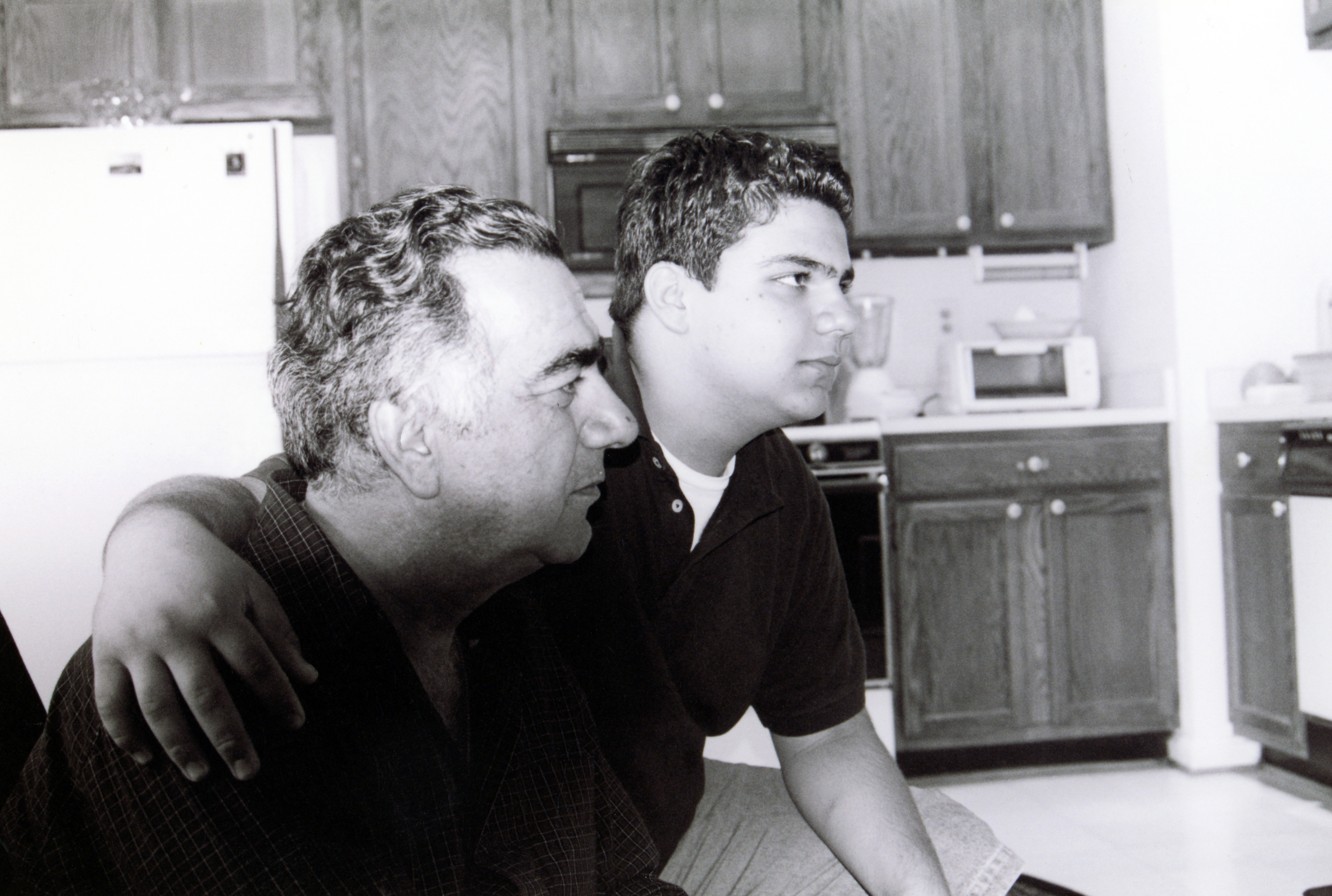
My father and younger brother Emmad in Springfield, VA.
The first was the gift of being seen. The moment I walked through the door, he would look up and his whole face would light up, as if the most important person had just arrived. I would kiss his face the way Afghan children do — a kiss on each cheek — and he would pull me into a tender embrace. He smelled faintly of gasoline from the taxi, a scent I have loved ever since, though I am still not sure whether it is pleasing on its own or simply because it was him. He would then set everything aside and listen with absolute attention, and in that moment I felt like I was at the center of his universe. He made me feel like I mattered. And I have walked into every room since then knowing I do.
The second gift was education — the dream he had uprooted his entire life to give us. He kept reminding my brothers and me: We have come to the United States for a better life. And the doorway to that better life is through education. Even if I have to sell the clothes on my back so you are educated, I will do it.
But he wasn't only asking us to get degrees. He had a phrase he returned to often, in Farsi: Elm-e-tabiyar — bring your knowledge to it. I became that student in the back of the classroom, hand always raised — but why? how does this work? — and I realize now that wasn't stubbornness. It was him. His voice, living on in me in rooms he never entered.
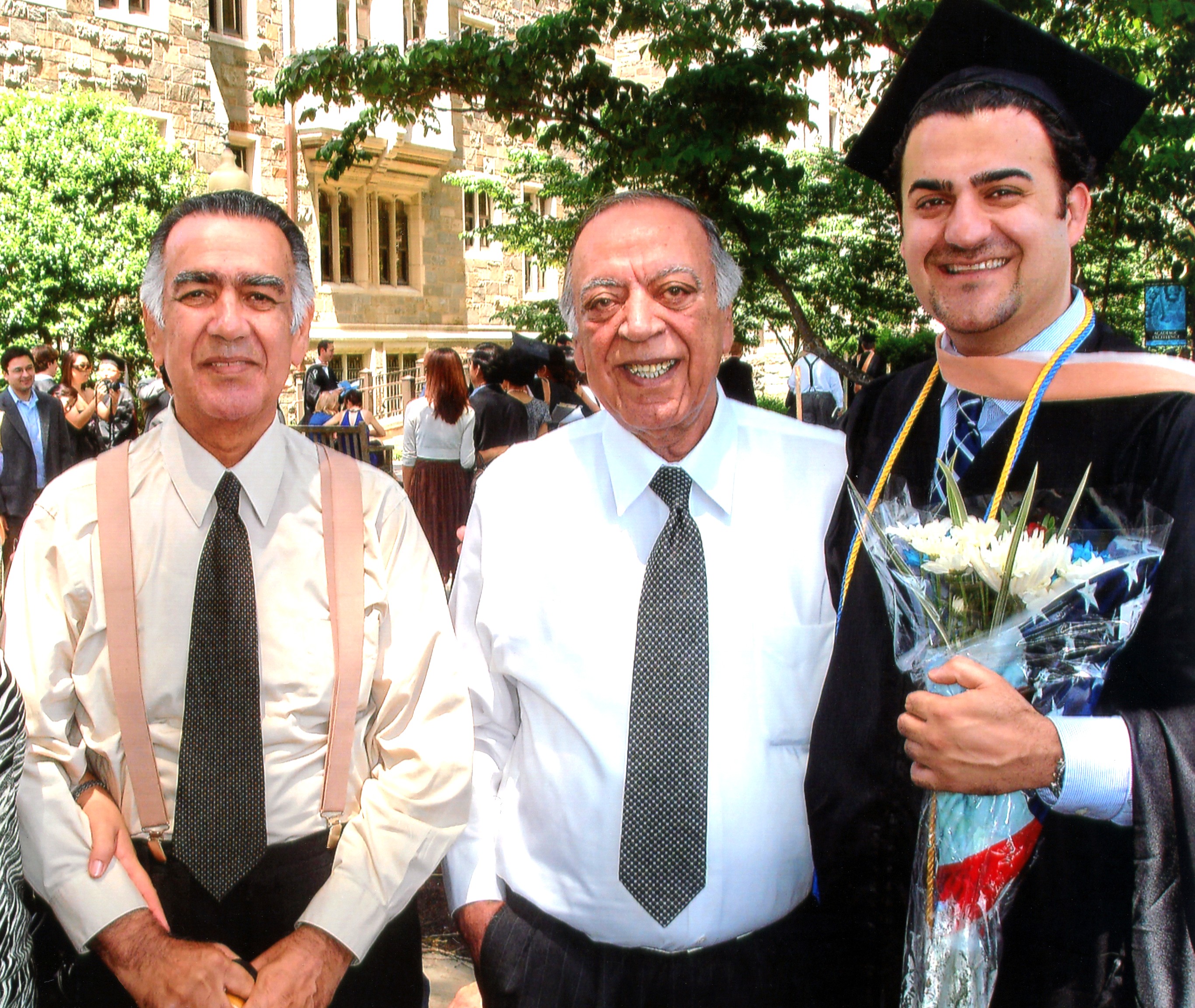
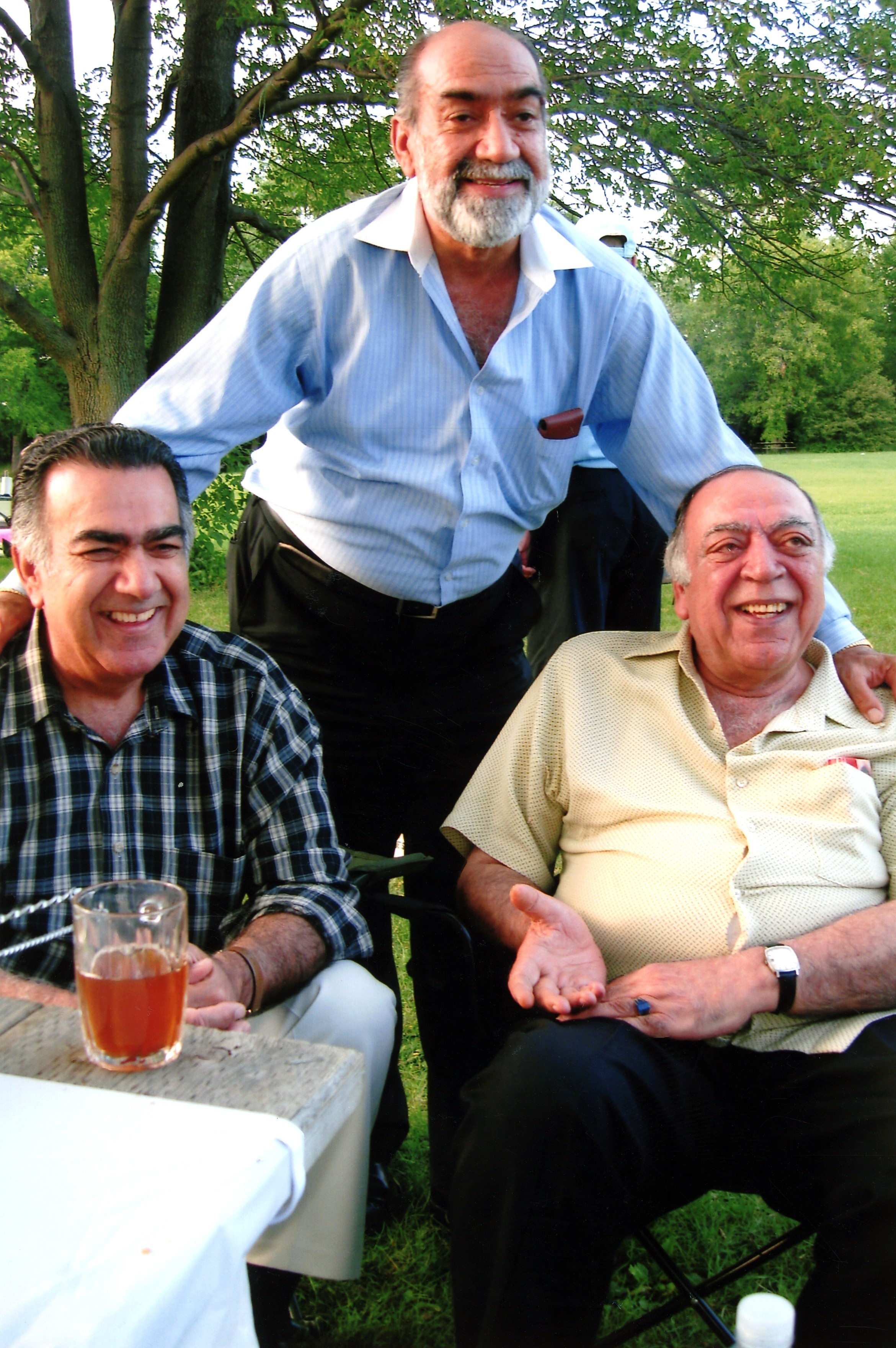
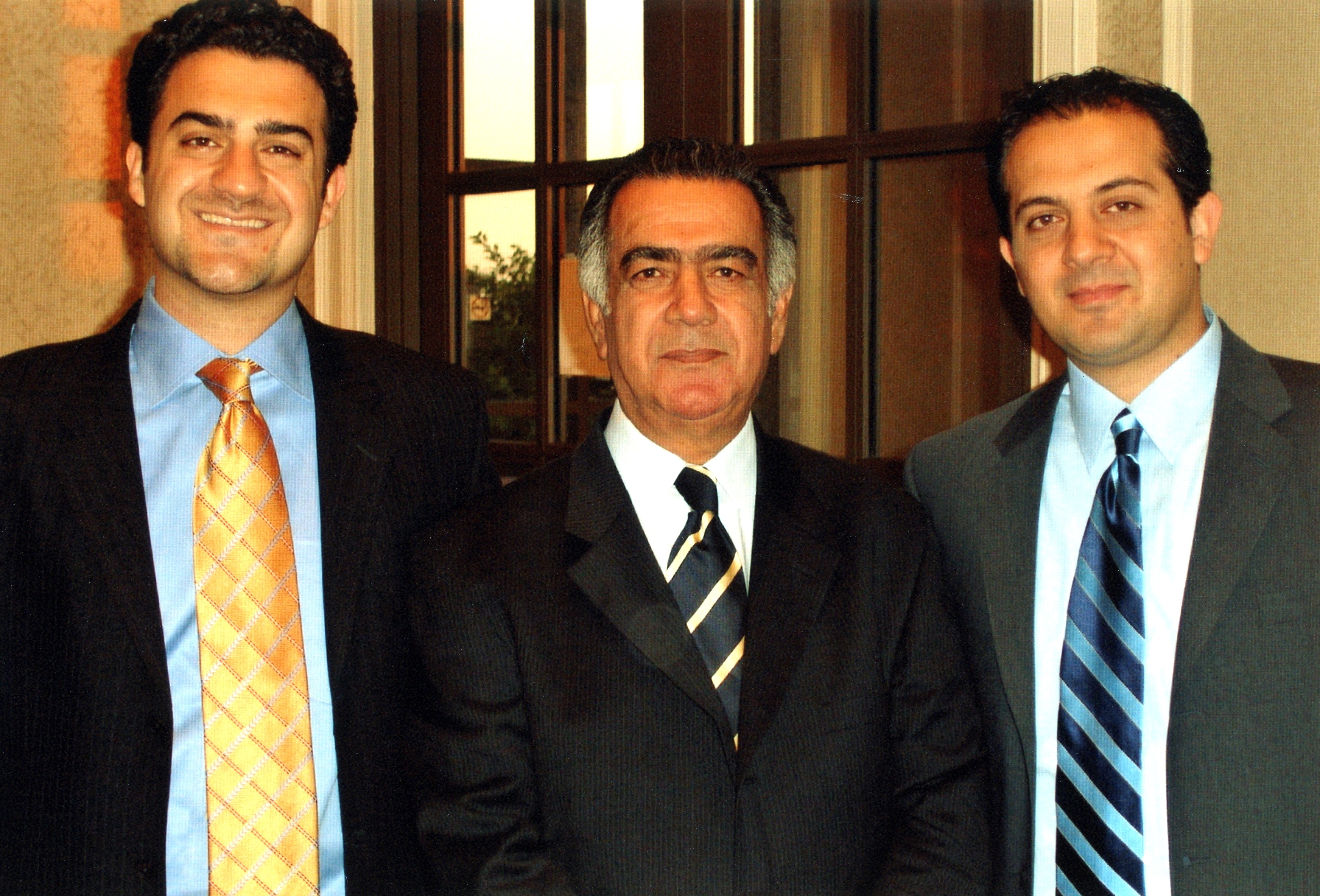
Georgetown University, 2010. My father (left) with his eldest brother and my beloved uncle.
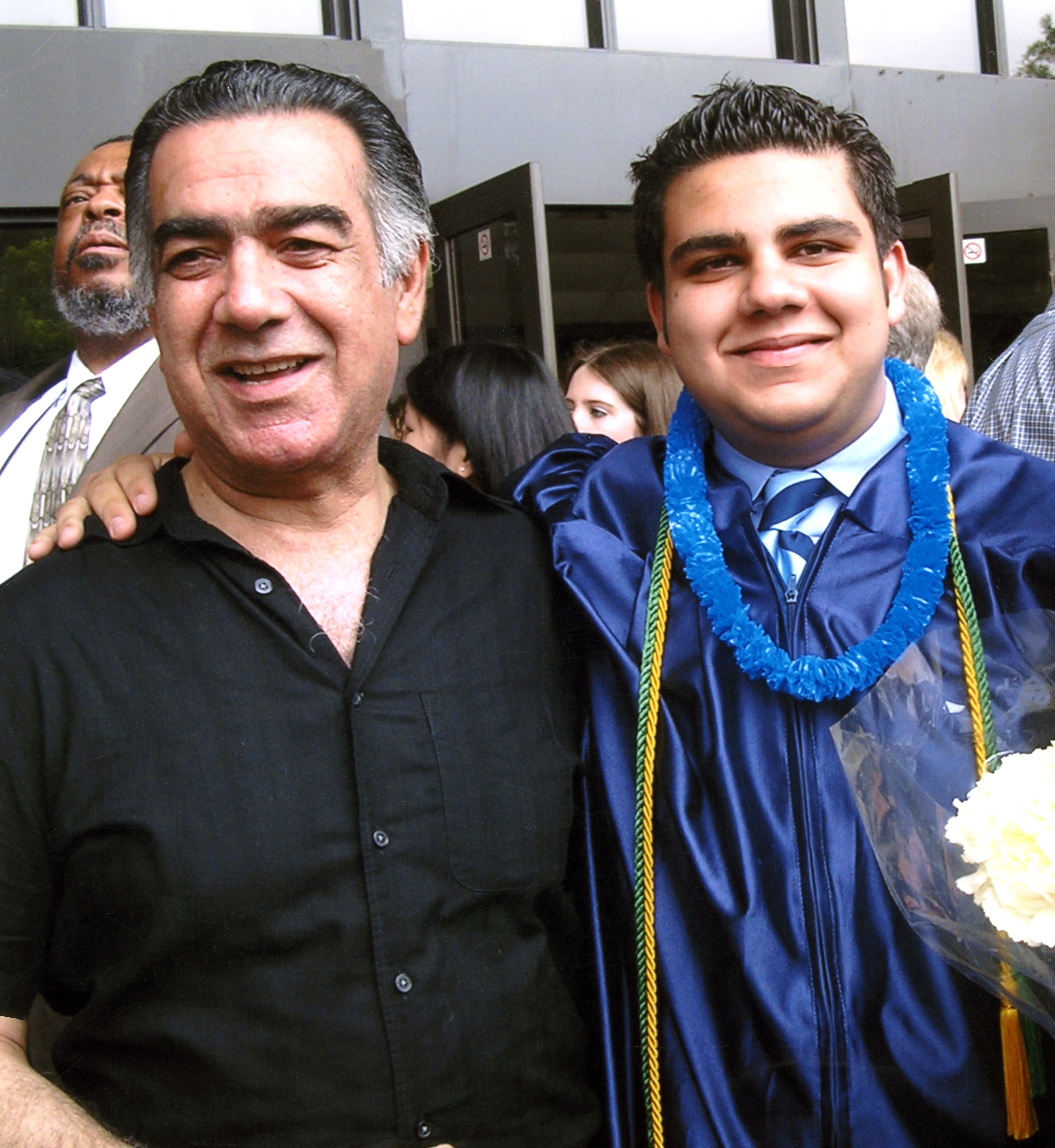
Years later, having earned an engineering degree from the University of Virginia, I stood on the lawn at Georgetown University as he watched me receive my MBA. He shed tears as I kissed his hands and presented him with my diploma. And then, in 2011, I returned to Afghanistan to serve as an advisor to the Minister of Energy and Petroleum — back to the country he had once fled in the night. He was reluctant to let me go, knowing what that land had cost our family. But when he saw me on television discussing oil and gas projects in Kabul, he called his friends and family to make sure they watched too. The boy he had carried out of Afghanistan had gone back to help rebuild it.
The third inheritance was fortitude. He drove nights after teaching to feed his family — enduring a year of severe abdominal pain that eventually required surgery in India, because Afghanistan couldn't provide the care he needed. He then lost his country to war and rebuilt his life from scratch in America. He worked at a toll booth at Reagan Airport making minimum wage, dozing off mid-shift from undiagnosed sleep apnea, and later survived a quadruple bypass surgery. I never once heard him complain. Not once. He carried it all in a wide chest and never let any of it harden his spirit. When life tempts me to give up or grow bitter, I think of him — and I don't.
On those Sunday afternoons, as I listened to his breathing slow into sleep, I did not know I was beside the most important teacher in my life. He taught me, without ever saying a word, that how you wake someone up matters. That the attention you give someone is a gift they never forget. That a man can arrive in a country with $200, not a word of the language, and still give his children more than he ever had.
In his final hours, his eyes were closed. He could no longer speak. His breathing had grown shallow, each breath a little further from the last. And the room was full — his children, my mother, his granddaughter, cousins, aunts, uncles, everyone who had ever been folded into the warmth of his life. Some were praying. Some were crying. Others were simply quiet. He could not see them. But they were there — every one of them. You cannot command that kind of love. You can only live in a way that makes people want to come. The room itself was the testimony.
When we brought him to his burial, the funeral home called for a police motorcycle escort — though the officers don't always come. They came. A procession of motorcycles led the way, followed by forty or fifty cars stretching back as far as I could see. Traffic stopped on both sides of the street. An ordinary man receiving a royal farewell. People pulled to the shoulder and waited, not knowing who was passing. And something in me knew — he was being seen, one last time, the way he had spent his whole life seeing others.
His mother once prayed the dust he touched would become gold. God heard her. In his quiet way, it did.
This essay was written by Weis Sherdel as a tribute to his father, Mohammad Arif Sherdel (1944–2014).